
A premium EFORA TV music experience dedicated to the timeless world of Russian Chanson — legendary voices, unforgettable songs, and stories filled with soul, romance, nostalgia, and life.
The Soul of Russian Song. The Power of Story. The Elegance of Time.
Step into the world of Russian Chanson with Chanson Forever — a distinguished EFORA TV presentation celebrating one of the most emotional, poetic, and enduring traditions in Russian-language music.
From unforgettable voices and legendary performers to songs of love, longing, fate, memory, and life itself, Chanson Forever brings viewers a refined collection of music shaped by history, character, and deep human feeling. This is a world where urban romance, lyrical storytelling, and iconic chanson classics come together in a richly atmospheric viewing experience.
Featuring celebrated artists, timeless songs, and the unmistakable spirit of a genre loved across generations, Chanson Forever is more than a music program — it is a journey into a cultural legacy of passion, authenticity, and unforgettable melody.
Elegant. Emotional. Legendary.
Only on EFORA TV.
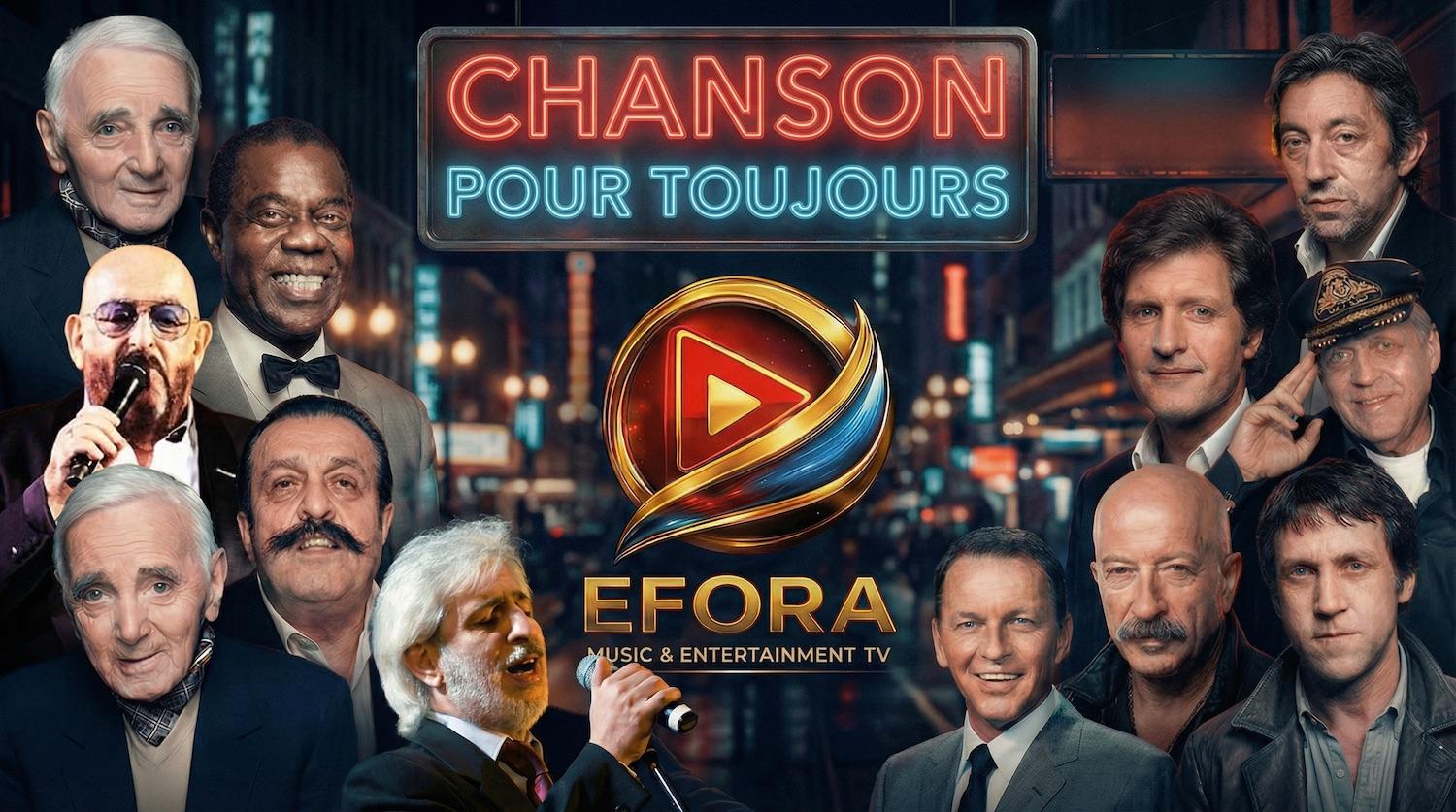
About the “Russian Chanson" Program
- About the Program: Russian Chanson
- History of Russian Chanson
- Subgenres of Russian Chanson
- Notable Performers
Part of EFORA TV’s Chanson Forever Collection
Russian Chanson is a rich and multifaceted musical tradition that brings together several genres, including urban romance songs, narrative ballads, lyrical songs, author-performed music, and compositions associated with criminal folklore and hard life stories.
The term “Russian Chanson” came into wider use in 1995, following the release of a television program of the same name on a Moscow TV channel. The project was created and directed by Sergey Sulimenko, co-authored and hosted by singer and actor Ivan Moskovsky, and produced by Yury Sevastyanov. Over time, the term became widely used as a collective label for songs linked not only to criminal themes, but also to lyrical, emotional, and author-driven musical storytelling. Around the same period, a television program by Alexander Frumin was also launched in Saint Petersburg, following an earlier audio compilation released under the same title.
Today, Russian Chanson is recognized as a broad musical world of emotion, memory, life experience, and storytelling — one that reflects both historical roots and modern musical trends.
Why This Program Matters
Russian Chanson is more than a musical genre. It is a cultural phenomenon shaped by history, social experience, human emotion, and musical storytelling. It brings together nostalgia, poetry, life’s struggles, love, memory, and personal truth in a way that remains deeply resonant for audiences.
As part of EFORA TV’s “Shanson Forever” collection, this program invites viewers to discover the history, spirit, and enduring popularity of one of the most recognizable and emotionally powerful traditions in Russian-language music.
EFORA TV — bringing timeless music stories to life.
A Brief History of Russian Chanson
The origins of Russian Chanson can be traced back to the early 20th century. Its development was influenced by the traditions of urban romance, songs performed in cafés and private gatherings, and even the atmosphere of the so-called “Odessa beat,” a distinctive musical style with jazz influences. Artists associated with these early roots include Alexander Vertinsky, Pyotr Leshchenko, and Anastasia Vyaltseva.
After the October Revolution, this kind of music was banned in Soviet Russia as “bourgeois,” but it continued to live on in émigré cultural centers such as Paris and New York.
During the 1930s–1950s, in the period of Stalinist repression, another strand emerged: the so-called “blatnaya” song — songs performed by prisoners and inspired by the realities of лагеря and prison life. These songs often spoke of hardship, friendship, betrayal, survival, and fate.
In the 1980s and 1990s, these traditions — prison songs, urban romance, tavern-style songs, and author-driven performance — began to merge. This fusion created the foundation of what later became widely known as Russian Chanson.
The genre reached its major rise in the 1990s, when the atmosphere of greater openness, social change, and economic transformation brought Russian Chanson into the mainstream. During this period, artists such as Mikhail Krug, Alexander Rosenbaum, and Mikhail Shufutinsky became especially well known.
Main Subgenres of Russian Chanson
Russian Chanson includes several important subgenres:
Blatnoy Chanson (criminal folklore chanson)
Often marked by direct lyrics and emotionally charged vocal delivery. This style is associated with performers such as Mikhail Krug, Butyrka, and Vorovayki.
Urban Romance
Lyrical songs about love, longing, life, and relationships, often without criminal vocabulary or themes. Examples include Sergey Trofimov and Stas Mikhailov.
Author’s Song
Songs written and performed by the artist, or interpreted in a personal style. These works often explore social, philosophical, and deeply personal themes.
Story-Song
Songs that tell a story — real or fictional — often based on life events, personal drama, or memorable characters.
Pop-Chanson
A more contemporary format that combines elements of pop music with the melodic and emotional identity of chanson.
Notable Performers
Some of the best-known names associated with Russian Chanson include:
- Mikhail Krug
- Alexander Rosenbaum
- Mikhail Shufutinsky
- Stas Mikhailov
- Lesopoval
- Ivan Kuchin
- Butyrka
- Lyubov Uspenskaya
“Chanson of the Year” Award
Since 2002, the annual “Chanson of the Year” award ceremony has been held by Radio Chanson. Nominees are chosen through listener voting, and the artists who top the charts throughout the year become laureates of the award. Winners receive an official diploma and a gold-plated statuette shaped like a guitar neck.